
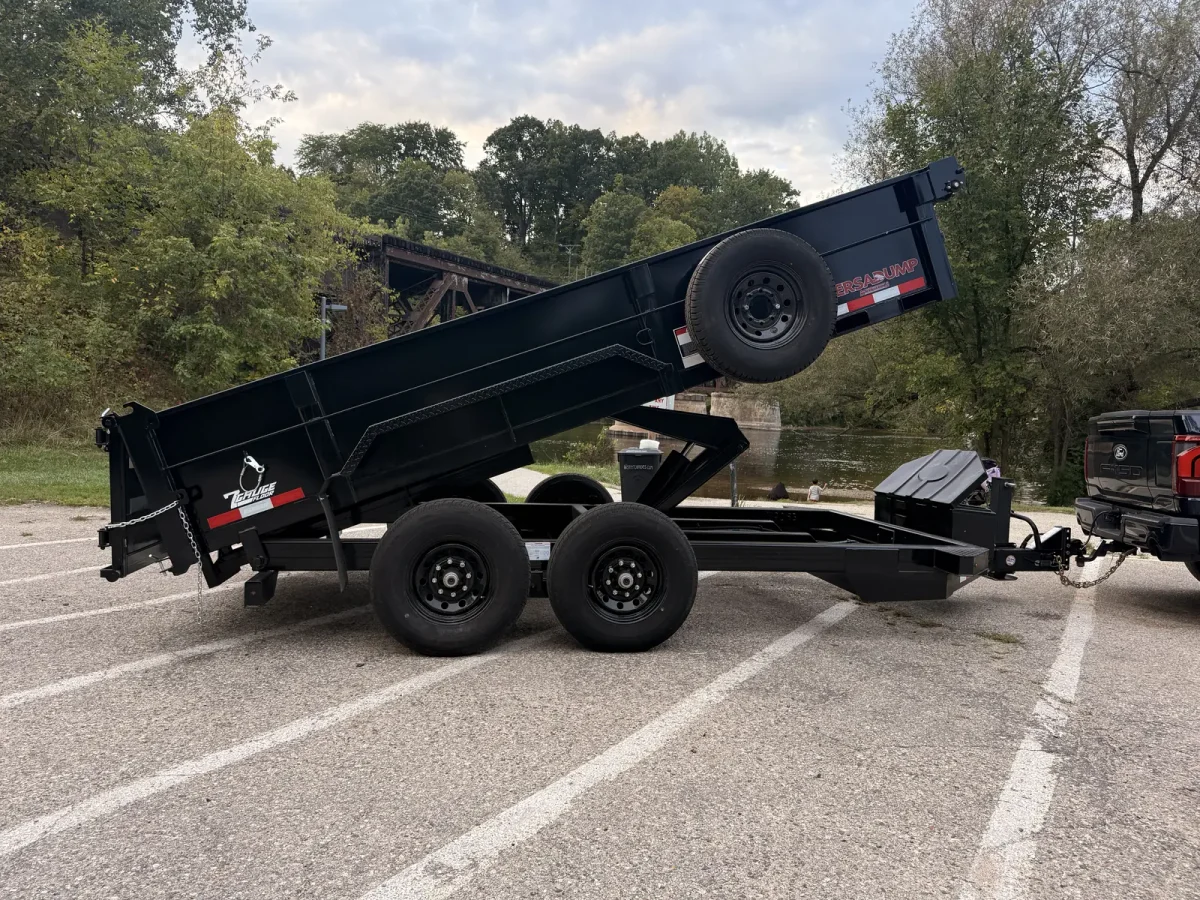
How is dump-trailer volume calculated?
Multiply the inside bed length, width and side height, then convert cubic feet to cubic yards by dividing by 27.
For an 82-inch-wide, 14-foot-long bed with 24-inch sides, the level volume is approximately 191 cubic feet, or 7.1 cubic yards. Rounded or sloped corners, gates and real loading conditions can reduce usable volume.
Why can’t every material fill the whole box?
Material density determines how quickly the load reaches the payload limit, and dense material can overload a trailer while the box still appears partly empty.
Do not choose a load from a generic yards-to-tons chart alone. Moisture, compaction, aggregate size and the supplier’s material can change actual weight.
- Ask the supplier for the expected weight
- Use scale tickets when available
- Include pallets, containers and other cargo
- Keep the trailer, axles, tires, hitch and truck within their limits
What controls the safe amount to haul?
The safe amount is the lowest limit among trailer payload, GVWR, axles, tires, hitch, tow vehicle and the way the load is distributed.
Volume is useful for mulch, brush and bulky cleanup material, but it is never permission to exceed a weight rating. JH requires approval before hauling dirt, sand, gravel or rock.
Before booking a dense JH dump load, send Joel the material, quantity, expected weight and tow vehicle.
Sources
For any real load, use the labels and manuals for the exact truck, hitch, trailer, and equipment in front of you.