
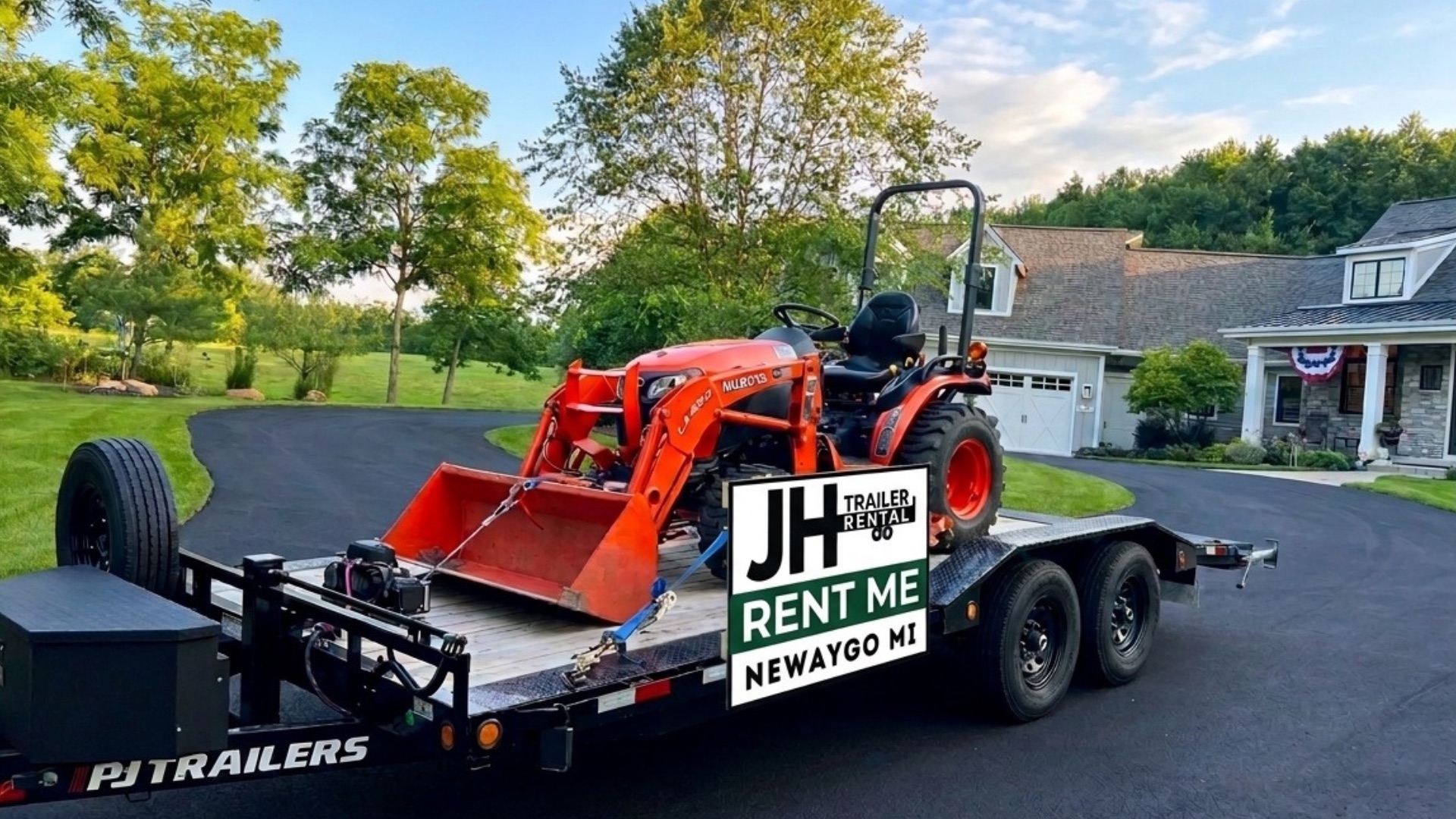
What should be checked before loading?
Confirm the trailer is connected correctly, the tow vehicle and trailer are on stable ground, the ramps are secured, and the planned load fits every applicable rating.
- Coupler, safety chains and breakaway system
- Tires, wheels, lights and brakes
- Ramp placement and capacity
- Deck condition and anchor points
- Vehicle dimensions, weight and ground clearance
Can a winch be used to load a non-running vehicle?
A properly rated winch can help load a non-running vehicle when the winch, line, attachment points and loading path are suitable for the job.
Keep bystanders away from the line and follow the winch manufacturer’s instructions. After loading, use separate transport securement; the winch is not a substitute for tie-downs.
When should loading stop?
Stop when the vehicle contacts the ramps or fenders, begins loading off-center, exceeds a rating, creates uncertain tongue loading or cannot be secured correctly.
Backing off and changing the plan is cheaper than forcing a bad setup.
Sources and verification
Always verify ratings and instructions for the exact tow vehicle, hitch, trailer and equipment being used.