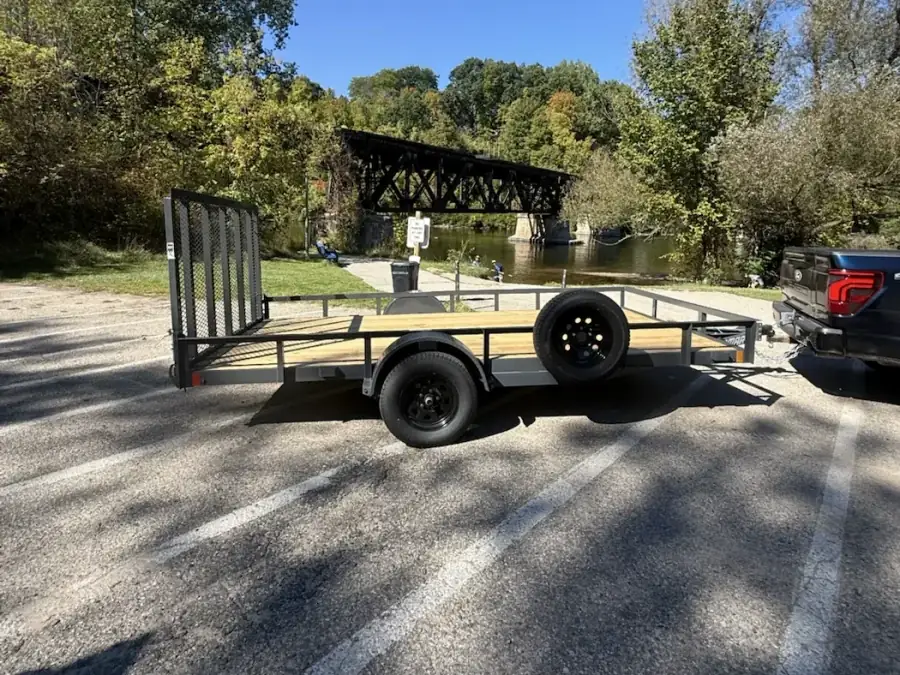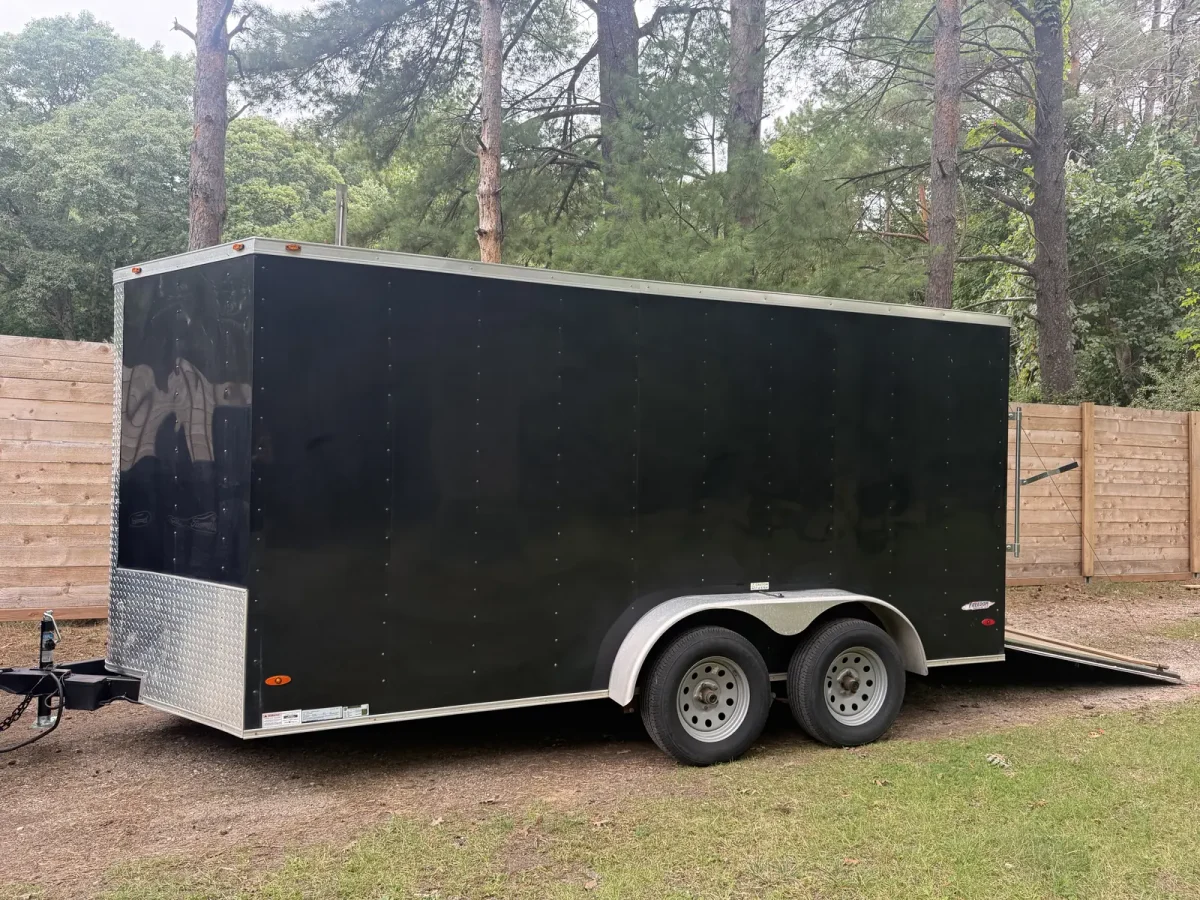
When does a single-axle trailer make sense?
A single-axle trailer makes sense for lighter cargo when low empty weight, lower cost and easy positioning matter more than maximum capacity.
Typical uses include household items, small lawn equipment and light project loads, provided the specific trailer and tow vehicle are properly rated.
When does a tandem-axle trailer make sense?
A tandem-axle trailer makes sense when the required deck size or loaded weight exceeds what an appropriate single-axle model can safely handle.
Cars, compact equipment, larger enclosed bodies and heavier contractor loads commonly push buyers or renters toward tandem-axle designs.
Tandem layouts usually bring a larger, steadier platform, along with more empty weight, tires, brakes, bearings, cost and turning scrub.
Is tandem axle automatically safer?
No. Safe towing still depends on ratings, tires, brakes, maintenance, cargo position, securement and driver behavior.
Axle count cannot compensate for overloading, poor maintenance or an improperly matched tow vehicle.
Sources
For any real load, use the labels and manuals for the exact truck, hitch, trailer, and equipment in front of you.